Despite deep political trust and ambitious projects, narrow academic ties are holding back India-Russia cooperation where it could matter most
Russia-India relations, underpinned by their status as a privileged strategic partnership, are emerging as a benchmark for bilateral cooperation between major powers. The rapid growth in mutual trade and the ambitious goal of reaching a total volume of $100 billion by 2030 indicate a significant new phase.
However, the sustainability and depth of such growth in the long term will be determined not only by trade flows or joint infrastructure projects but also by the ability to create a shared educational and scientific-technological space.
The development strategy for the Russian Far East holds particular significance, representing a point of mutual interest for both Moscow and New Delhi. Russia sees this region as a strategic priority due to its enormous natural resources, its role as the main logistics hub in the Asia-Pacific region, and the importance of strengthening its eastern borders.
India, in turn, views the Far East as a promising direction for investment and expanding its economic influence in Asia. However, despite mutual interest, many promising intergovernmental agreements, including the Program of Russian-Indian Cooperation in Trade, Economic, and Investment Spheres in the Far East of the Russian Federation for 2024-2029, and the agreement on cooperation principles in the Arctic Zone of the Russian Federation, signed by ministers from both countries, lack notable successful implementation examples.
A key challenge is the low population density. The region faces a chronic shortage of workforce at various levels, both ordinary workers and highly qualified specialists. The region requires tens of thousands of workers in the agro-industrial complex, hospitality, tourism, and construction sectors, which provide the infrastructural and service foundation for economic growth.
Attracting foreign workers represents the main solution to this workforce shortage. The existing influx of labor migration of Indian citizens to Russia, which has grown from 8,000 to 36,200 work permits in recent years, is predominantly low-skilled and does not solve the problem of personnel shortages for high-tech segments. Solving this requires moving beyond targeted labor migration toward a comprehensive system of training and subsequent retention of specialists whose competencies meet the specific demands of the Far Eastern economy.
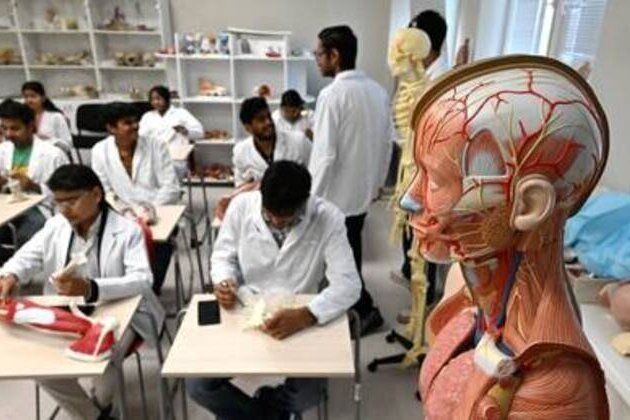
Academic exchange between Russia and India needs fundamental restructuring. Despite an impressive 58.9% growth in the number of Indian students in Russia from 2022 to 2024, there is a serious structural imbalance. More than 95% of students are majoring exclusively in medicine. After completing their education, the majority of graduates return to India without integrating into Russian society and the economy, which minimizes the long-term effect of this educational export.
Paradoxically, entire fields that are hugely popular among Indian applicants in the US, EU, and Australia are virtually unrepresented in Russia. These include critically important areas for technological development such as new materials production, transport engineering, medical chemistry and instrumentation, and information technology. This imbalance is exacerbated by a poorly developed network of inter-university agreements. Compared to the well-established partnerships with Chinese universities, including numerous joint programs and even institutes, interaction with Indian universities appears less intensive. This highlights a strategic weakness in how Russian education is positioned in the Indian market and the absence of targeted, industry-oriented offerings.
Another factor hindering Russian-Indian cooperation in the Far East is a lack of mutual awareness: in India, there is a quite limited understanding of the specifics, opportunities, and regulatory environment of the Far Eastern regions. At the same time, Russian businesses do not always quite understand the structure and dynamics of demand in the Indian market.
This information gap slows practical cooperation in agriculture, logistics, and other areas despite existing political will and framework agreements.
Far Eastern Federal University (FEFU) has been contributing to the process of bridging this gap. It emerged as a unique platform that combines academic traditions of the Oriental Institute, founded in 1899, with the demands of modern economic diplomacy and technological development. As the largest university in the macro-region and a recognized leader in Asian studies in Russia, FEFU serves as a strategic operator for implementing state policies in these fields.
A pilot model for diversifying scientific and educational cooperation between Russia and India could be the integration of science, education, and production in the agro-industrial complex, which can serve as a benchmark for other sectors. The Far East's potential in agriculture is enormous: beyond crop production, it includes the development of greenhouse farms and the fishing industry, which saw a 7% increase in transportation in 2025. However, realizing this potential is impossible without modern biotechnologies and specialists skilled in deep processing methods, bioengineering, and aquaculture. FEFU has developed a unique model in partnership with industry leaders, where real manufacturing cases are incorporated into curricula and students can take up internships and participate in joint R&D.
READ MORE: Between Hormuz and Moscow: How India manages oil in a world of chokepoints
This "university + industrial partner" model can and should be scaled to relations with India, creating joint educational programs with Indian universities in conjunction with specific enterprises on both the Russian and Indian sides. Exchange of technologies in the production of feed additives and probiotics, joint research in agrobiotechnology, training personnel for deep processing of soybeans and seafood.
Thus, the strategic priority for the Russian-Indian partnership today is moving beyond trade and isolated projects toward sustainable collaborative ecosystems, with education at their heart. The development of a network of specialized joint educational programs, especially in priority areas for the Far East (agriculture, IT, construction, logistics, tourism), is a direct path to solving the personnel deficit, diversifying the flow of Indian students and, most importantly, forming a common generation of professionals. These specialists will not only possess modern competencies but also serve as living bridges connecting the economies and societies of the two countries.



 Share
Share
 Tweet
Tweet
 Share
Share
 Flip
Flip
 Email
Email